December 2, 2025
As climate commitments move from ambition to accountability, buyers are under increasing pressure to ensure the carbon credits they use are credible, defensible, and aligned with emerging market expectations.
That’s why Carba is developing a project designed to deliver carbon credits that align with the Core Carbon Principles (CCPs) and are issued through the Isometric Protocol and Registry — giving buyers greater confidence in quality, integrity, and long-term value.
What the CCP Label Means for Carbon Credit Buyers
For buyers, the Core Carbon Principles function as a quality filter in a crowded market. The 10 CCPs were developed by the Integrity Council for the Voluntary Carbon Market (ICVCM) with robust public consultation in response to growing concerns about inconsistent quality and unclear claims in the voluntary carbon market.
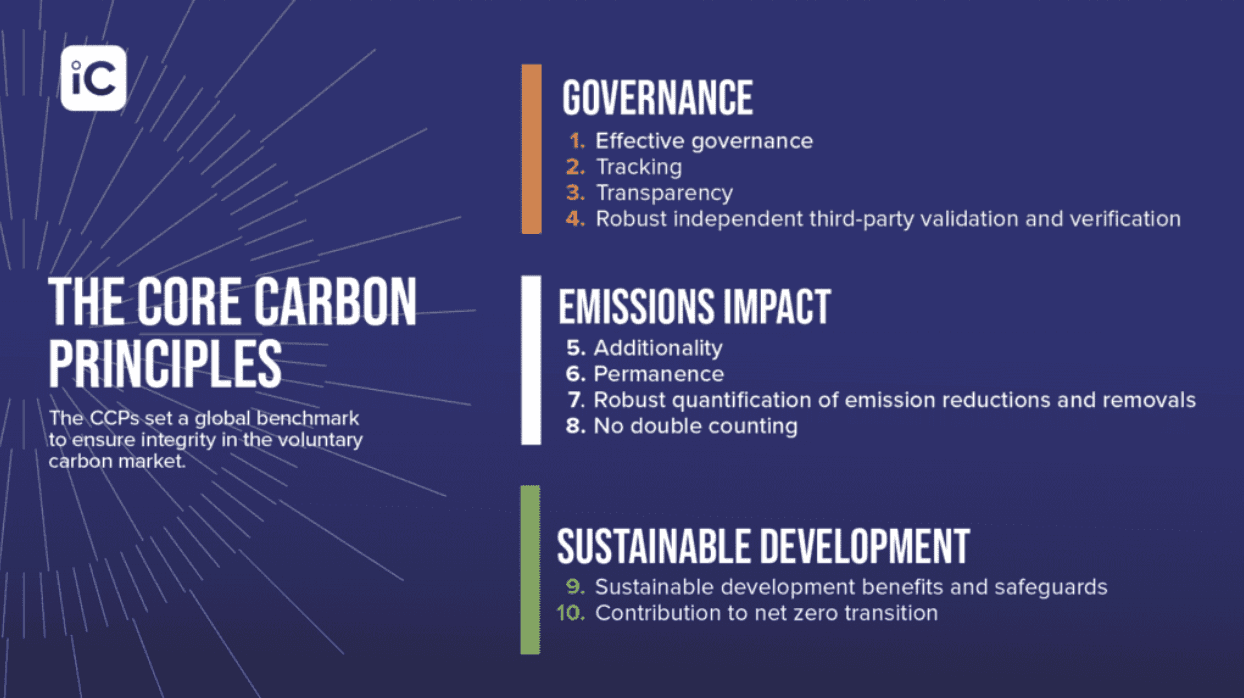
To make the benchmark usable and comprehensive, the ICVCM grouped the 10 CCPs into three interconnected pillars:
1. Governance and Transparency
Ensures strong oversight, clear rules, registry integrity, and public accountability.
2. Emissions Impact and Integrity
Focuses on real, additional, measurable, and durable emissions reductions or removals.
3. Sustainable Development and Safeguards
Addresses environmental and social risks, ensuring projects do no harm and deliver co-benefits where possible.
This structure allows buyers, standards, and registries to systematically assess quality, rather than relying on subjective judgment. As regulatory scrutiny and public expectations increase, CCP alignment helps buyers reduce reputational, compliance, and portfolio risk — while supporting credible climate action. In practice, CCP alignment helps buyers answer a critical question: “Will these credits still be considered credible in five or ten years?”
Why the Registry Matters: The Role of Isometric
For buyers, how credits are issued and tracked matters just as much as the project itself.
Carba’s credits are issued through the Isometric Protocol and Registry, which was purpose-built for high-integrity carbon removal and aligns closely with CCP expectations.
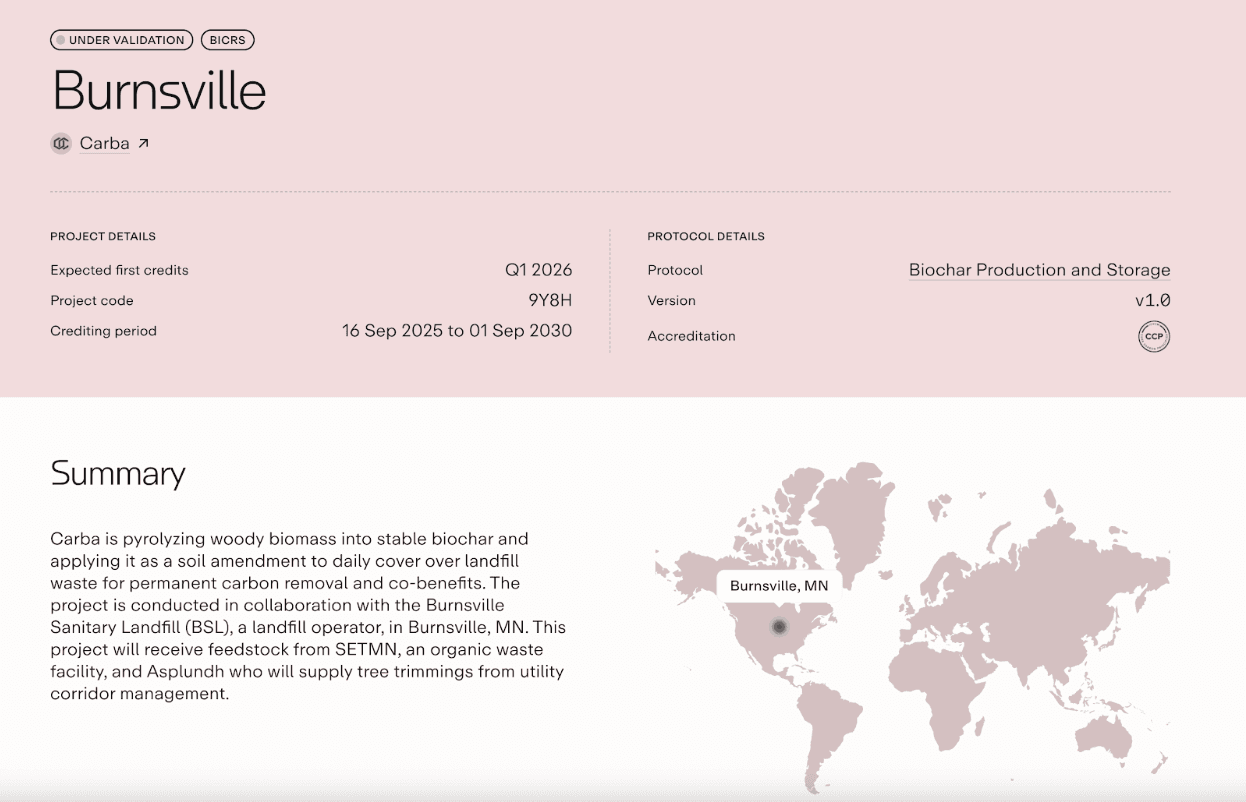
From a buyer’s perspective, Isometric provides:
Science-based, conservative methodologies that reduce over-crediting risk
Transparent, auditable MRV backed by third-party verification
Clear traceability and public records, reducing double-counting concerns
A focus on durability and long-term carbon storage, not short-term offsets
This infrastructure gives buyers greater visibility into how credits are quantified, verified, and managed over time.
How Carba's Project Delivers Buyer-Grade Credits
Carba’s project represents a critical advancement in biochar – a permanent biochar project with significant human health co-benefits.
Durable Carbon Removal Through Biochar
Carba’s project removes carbon from the atmosphere by converting biomass into biochar, a stable, carbon-rich material and buries it in a low oxygen environment in landfills. Burying biochar eliminates the primary mechanisms of biochar degradation (fungal decomposition, aerobic microbial attach, photooxidation, free radical oxidation, mechanical attrition and dust formation and redox cycling). This gives the biochar 1000+ year permanence.
Additionality Backed by Project Economics
The project is structured so that carbon finance is material to project viability. Revenue from carbon credits enables the deployment and scaling of biochar production that would not occur without carbon market participation — supporting defensible additionality claims. By using already permitted landfills, however, this pathway is extremely scalable – a necessary feature to ensure carbon removal can be part of the toolkit to address the climate change crisis.
Quantification and Verification via the Isometric Protocol
Carba’s credits are quantified using the Isometric biochar protocol with storage in low oxygen environments, which applies conservative, science-based assumptions to measure net carbon removals. Credits are independently verified and issued through the Isometric Registry, giving buyers transparent, auditable records aligned with CCP expectations.
Permanence and Risk Management
The project design incorporates safeguards to manage permanence risk, including:
Tracking of biochar production and landfill storage
Conservative crediting assumptions
Ongoing monitoring consistent with Isometric requirements
These measures help protect buyers from reversal and over-crediting risk over time.
Supply Chain Transparency and Sustainability
Carba prioritizes responsibly sourced biomass and clear documentation across the project lifecycle — from feedstock sourcing through biochar production and end use. Carba’s biomass source for the Burnsville Landfill Project is tree trimmings from utility corridor management local to the Twin Cities area. The alternative destination for the biomass would be composting which would degrade quickly with release of methane and CO2 to the atmosphere. This supports buyer expectations around environmental integrity and responsible sourcing.
In Summary
Together, the CCPs define what quality means, Isometric ensures that quality is enforced, and Carba delivers the underlying climate impact. Carba’s approach is about delivering buyer-grade carbon credits — not just today, but for the long term.